
Ovary & Tube Removal Surgery (Salpingo-Oophorectomy) in Singapore
Home Gynaecology Ovary & Tube Removal Surgery (Salpingo-Oophorectomy) in Singapore
Dr. Chang T.C.
Obstetrician & Gynaecologist Singapore
MBBS London, MD London, FRCS Glasgow, FRCOG UK, FAMS
The operation is usually the more straightforward part. Keyhole ovary removal surgery is often day surgery, with many women back to light activity within a fortnight. The harder work comes first: deciding whether one ovary can be preserved, what that means for fertility, and whether hormone replacement therapy will be part of your life afterwards.
Dr TC Chang performs ovary removal surgery in Singapore at Thomson Medical Centre across the full range of clinical indications and can guide you through your decision.
What Is a Salpingo-Oophorectomy?
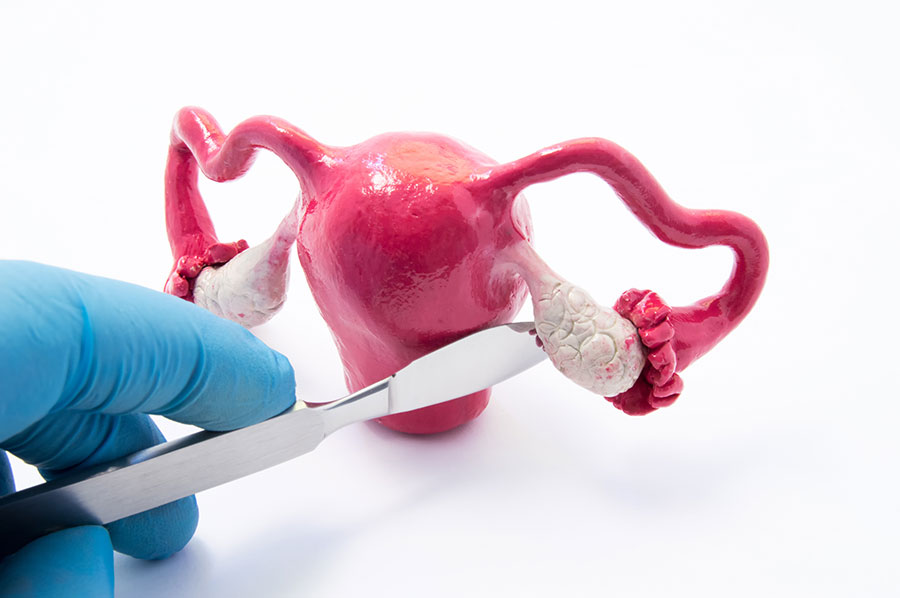
A salpingo-oophorectomy is a surgical procedure to remove one or both ovaries and their associated fallopian tubes. It is performed under general anaesthesia and can be carried out laparoscopically (through small keyhole incisions) or through open surgery.
Unilateral vs Bilateral: What the Difference Means for You
A unilateral procedure removes one ovary and one fallopian tube, leaving the other side intact.
A bilateral salpingo-oophorectomy removes both, bringing on surgical menopause immediately after surgery regardless of your age. Dr Chang will only recommend bilateral removal when the clinical situation requires it.
Removing the Tube Only (Salpingectomy)
A salpingectomy removes only the fallopian tube without disturbing the ovary. It is most commonly performed following an ectopic pregnancy or to reduce the risk of a particular type of ovarian cancer thought to originate in the tube. Ovarian function and hormone production are preserved.
When It Is Done Alongside a Hysterectomy
Ovary and tube removal is sometimes performed alongside a hysterectomy (removal of the uterus). This is a separate decision that depends on your age, reason for surgery, and risk profile.
When Ovary or Tube Removal Surgery May Be Recommended
Ovary or tube removal surgery may be recommended for the following conditions:
- Large, complex, or persistent ovarian cysts where the ovary cannot be meaningfully preserved
- Ovarian torsion where the blood supply has been cut off long enough to cause tissue loss
- Severe endometriosis or endometriomas that have not responded to conservative surgery
- Ectopic pregnancy or fallopian tubes damaged beyond safe preservation
- Suspected or confirmed ovarian cancer requiring tissue diagnosis or surgical treatment
- Risk-reducing surgery for women carrying a BRCA1 or BRCA2 gene mutation
Large, Complex or Persistent Ovarian Cysts
Many ovarian cysts are managed by removing the cyst alone. Ovary removal surgery is considered when a cyst contains suspicious features on imaging, or has replaced so much healthy tissue that the ovary cannot be preserved.
Ovarian Torsion
Severe Endometriosis and Endometriomas
Ectopic Pregnancy and Damaged Fallopian Tubes
Suspected or Confirmed Ovarian Cancer
Risk-Reducing Surgery for BRCA Carriers
Women carrying a BRCA1 or BRCA2 mutation face a significantly higher lifetime risk of ovarian cancer. Risk-reducing bilateral salpingo-oophorectomy is one of the most effective options for reducing that risk, recommended from around age 35 to 40 for BRCA1 carriers and slightly later for BRCA2 carriers, once a woman has completed her family.
Discuss your options with Dr Chang in Singapore to find out whether ovary removal surgery is appropriate for you with Dr Chang.
What to Consider Before Ovary Removal
The decision to remove an ovary or both ovaries has implications beyond the surgery itself. There is no obligation to proceed after a consultation, and a second opinion is reasonable.
Before deciding, consider discussing the following with Dr Chang:
- Your plans for future pregnancy and what removal means for your ovarian reserve
- Whether one ovary can be preserved, or whether bilateral removal is necessary
- The likelihood of surgical menopause and whether HRT would be appropriate for you
- Any concerns about changes to sexual wellbeing or intimacy after surgery
- The option of a second opinion before committing to a date
Fertility and Ovarian Reserve
- Removing one ovary reduces your ovarian reserve, though many women with one ovary conceive without difficulty
- Bilateral removal ends the possibility of natural conception
- If fertility is a concern, discuss it before any surgical decision is made
Dr Chang also offers a preconception and fertility screening package for women who wish to understand their reproductive health before or after surgery.
Surgical Menopause After Bilateral Removal
When both ovaries are removed before natural menopause, the body enters menopause immediately. Understanding the side effects of ovary removal before surgery helps set realistic expectations.
Unlike natural menopause, surgical menopause is abrupt. Symptoms may include hot flushes, night sweats, sleep disturbance, mood changes, and vaginal dryness, and may be more pronounced because of the sudden drop in oestrogen.
Hormone Replacement Therapy (HRT)
HRT is commonly recommended for women who experience surgical menopause before the natural age of menopause, typically around 49 in Singapore. It relieves menopausal symptoms and reduces risks associated with early oestrogen loss, including bone thinning and cardiovascular changes.
Sexual Wellbeing and Intimacy
Some women notice changes to their libido or comfort during intercourse after ovary removal, particularly if oestrogen levels fall significantly. These changes are not inevitable and are often manageable with HRT or localised treatment.
Questions about fertility, menopause, or HRT after ovarian removal surgery in Singapore? Dr Chang can advise based on your age, health, and circumstances.
How the Procedure Is Performed
Before surgery, Dr Chang will review your imaging and confirm the surgical plan. You will be asked to fast for several hours beforehand.
The procedure is performed under general anaesthesia and typically takes 30 minutes to two hours. Most patients go home the same day or the following morning.
Laparoscopic (Keyhole) Salpingo-Oophorectomy
Laparoscopic surgery uses three to four small incisions of less than 1 cm. The ovary and tube are removed through one of the incisions, often in a small retrieval bag. It is the preferred approach where possible, with less post-operative pain, a shorter hospital stay, and faster recovery.
Open (Laparotomy) Salpingo-Oophorectomy
What Happens to the Tissue After Removal
Recovery After Ovary and Tube Removal
Typical Recovery Timeline
| Approach | Return to light activity | Full internal healing |
| Laparoscopic | 1 to 2 weeks | 6 to 8 weeks |
| Open surgery | 2 to 4 weeks | 6 to 8 weeks or longer |
Physical strain during the internal healing period can cause complications even when you feel comfortable. A common and underestimated symptom after laparoscopic surgery is shoulder-tip pain, caused by carbon dioxide gas irritating the diaphragm. This usually resolves within 24 to 48 hours. Light vaginal spotting and fatigue in the first fortnight are also expected.
Activity, Work and Exercise Restrictions
Avoid the following until Dr Chang confirms it is safe:
- Driving
- Lifting anything heavier than a small bag
- Strenuous exercise
When to Seek Medical Attention
You should contact Dr Chang’s practice promptly if you experience any of the following:
- Heavy or increasing vaginal bleeding
- A fever above 38°C
- Severe or worsening abdominal pain
- Redness, swelling, or discharge at any incision site
- Difficulty passing urine
Risks and Possible Complications
Salpingo-oophorectomy is generally well-tolerated, but carries risks including:
- Bleeding
- Infection
- Injury to nearby structures, including the ureter, bladder, or bowel
- Complications related to general anaesthesia
Frequently Asked Questions
Is ovary removal a major surgery?
It depends on the approach. Keyhole (laparoscopic) surgery is minimally invasive and not typically considered major surgery. Open surgery involves a larger incision, a longer recovery, and is generally the more significant of the two. Both are performed under general anaesthesia.
What is the difference between a hysterectomy and a salpingo-oophorectomy?
A hysterectomy removes the uterus, while a salpingo-oophorectomy removes the ovary and fallopian tube. They are separate procedures, though sometimes performed together.
Can you get pregnant after a salpingo-oophorectomy?
After a unilateral procedure, natural conception remains possible. After a bilateral salpingo-oophorectomy, it is not. Egg or embryo freezing prior to bilateral removal may be worth exploring if fertility is a concern.
What is the difference between a salpingo-oophorectomy and a salpingectomy?
A salpingectomy removes only the fallopian tube, while a salpingo-oophorectomy removes both. If only the tube is removed, your ovaries continue to function normally.
What happens when both ovaries are removed?
You go into surgical menopause straight away. This means your periods stop and oestrogen levels drop immediately, which can bring on symptoms like hot flushes, night sweats, sleep problems, and mood changes. Hormone replacement therapy (HRT) is often recommended to manage this.
Do you age faster after having your ovaries removed?
Not necessarily. Early oestrogen loss can affect bone density and cardiovascular health over time, but most of these risks can be well managed with HRT. Whether it affects how you feel or look varies considerably between individuals.
At what age is ovary removal surgery usually considered?
There is no fixed threshold. For BRCA carriers, most guidelines suggest considering surgery from the mid-30s onwards. For other indications, the decision is made case by case.
What are the side effects of ovary removal surgery?
If only one ovary is removed, women typically notice little long-term change. If both are removed, the main consequence is surgical menopause, with symptoms including hot flushes, night sweats, vaginal dryness, and mood shifts. Most are manageable with HRT.
Ovary Removal Surgery in Singapore: Speak to Dr Chang
Whether you have been referred after a scan, are managing a condition that has not responded to other treatment, or want to understand your options before committing to anything, a consultation is the right starting point.
Dr TC Chang is an obstetrician and gynaecologist in Singapore, with an interest in laparoscopic gynaecological surgery including oophorectomy. He consults at Thomson Medical Centre and will work through your scans, symptoms, and circumstances with you.
There is no obligation to proceed with ovarian removal surgery after your appointment. The goal is simply to make sure you have the information to decide what is right for you.